Windows 10 Gpt Iso Download
Posted : admin On 18.12.2020When installing Windows on UEFI-based PCs using Windows Setup, your hard drive partition style must be set up to support either UEFI mode or legacy BIOS-compatibility mode.
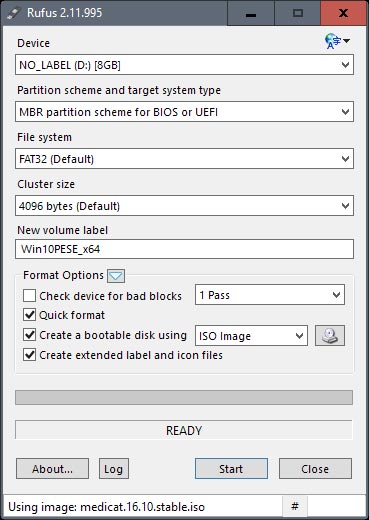
Download Windows 10 ISO file from the official site on another computer, download Rufus, run it and in the main interface choose “GPT partition scheme for UEFI” from the ‘Partition scheme and target system type’ drop-down list, then select the ISO file and click “Start” to burn. The latest Windows 10 Insider Preview, Codename 21H1, Version 21H1, Build 10.0.20270 (also called Windows 10 21H1, Windows 10 20270) is instantly available for free download, upgrade, and manual offline installation through bootable DVD or USB flash drive on Windows-powered computers and laptops for testing and experimenting. It's simple just download rufus and insert one blank pendrive and load the iso (Windows 7 or later bootable windows OS) file click on the cd dive icon and there is option called 'Partition Scheme and target system type' just change that from MBR to GPT. And click on start after finishing close it and boot the pen drive. Restart the computer and make sure that the BIOS can not boot from the hard disk with the GPT table. Plug in a small USB flash drive or an SD card. Boot from the Windows installation (DVD/USB) media with (suitable Windows 10 or Windows 7 installation image), and press Shift+F10 on the Windows Setup screen to open the command prompt.
For example, if you receive the error message: “Windows cannot be installed to this disk. The selected disk is not of the GPT partition style”, it’s because your PC is booted in UEFI mode, but your hard drive is not configured for UEFI mode. You’ve got a few options:
Reboot the PC in legacy BIOS-compatibility mode. This option lets you keep the existing partition style. For more info, see Boot to UEFI Mode or Legacy BIOS mode.
Configure your drive for UEFI by using the GPT partition style. This option lets you use the PC’s UEFI firmware features.
You can preserve your data and convert the drive using the MBR2GPT tool. You can also choose to reformat the drive using the instructions below. Reformatting will erase all the data on the drive.
This version of the Windows and GPT FAQ applies to Windows 10 and Windows Server 2016. For a previous version of this FAQ, see Windows and GPT FAQ on MSDN. Since the introduction of the personal computer, the data storage area on a hard disk has been divided into smaller areas called sectors.
Why should I convert my drive?
Many PCs now include the ability to use the UEFI version of BIOS, which can speed up boot and shutdown times and can provide additional security advantages. To boot your PC in UEFI mode, you'll need to use a drive formatted using the GPT drive format.
Many PCs are ready to use UEFI, but include a compatibility support module (CSM) that is set up to use the legacy version of BIOS. This version of BIOS was developed in the 1970s and provides compatibility to a variety of older equipment and network configurations, and requires a drive that uses the MBR drive format.
However, the basic MBR drive format does not support drives over 4TB. It's also difficult to set up more than four partitions. The GPT drive format lets you set up drives that are larger than 4 terabytes (TB), and lets you easily set up as many partitions as you need.
Reformatting the drive using a different partition style
To wipe and convert the drive by using Windows Setup

Turn off the PC, and put in the Windows installation DVD or USB key.
Boot the PC to the DVD or USB key in UEFI mode. For more info, see Boot to UEFI Mode or Legacy BIOS mode.
When choosing an installation type, select Custom.
On the Where do you want to install Windows? screen, select each of the partitions on the drive, and select Delete. The drive will show a single area of unallocated space.
Select the unallocated space and click Next. Windows detects that the PC was booted into UEFI mode, and reformats the drive using the GPT drive format, and begins the installation.
To manually wipe a drive and convert it to GPT:
Turn off the PC, and put in the Windows installation DVD or USB key.
Boot the PC to the DVD or USB key in UEFI mode. For more info, see Boot to UEFI Mode or Legacy BIOS mode.
From inside Windows Setup, press Shift+F10 to open a command prompt window.
Open the diskpart tool:
Identify the drive to reformat:
Select the drive, and reformat it:
Close the command prompt window.
Continue the Windows Setup installation.
When choosing an installation type, select Custom. The drive will appear as a single area of unallocated space.
Select the unallocated space and click Next. Wavepad sound editor masters edition serial key. Windows begins the installation.
Make sure Windows Setup boots to the correct firmware mode
To automate this process, you'll need to run Windows Setup through Windows PE, and use a script to detect which mode you’re in before installing Windows. For more info, see WinPE: Boot in UEFI or legacy BIOS mode.
Related topics
Although you can download the ISO file to install Windows 10 from the Microsoft support website, you can only download the latest version, as the website doesn’t include an option to select older versions.
However, if you upgraded your computer by mistake, you’re experiencing compatibility problems with a new version, or you don’t like the new release, you can download older versions of Windows 10 using the Rufus tool to rollback to a previous version.
Rufus is a free third-party tool designed to create a bootable USB flash drive to install Windows 10, but unlike the Media Creation Tool, Rufus can also download the ISO file and prepare the bootable media using an older version of Windows 10.
In this guide, you’ll learn the steps to use Rufus to download the ISO file and create a bootable media to install older versions of Windows 10, even if they’re no longer supported.
Download older versions of Windows 10 using Rufus
To create a USB media with an older version of Windows 10, use these steps:
Open Rufus website.
Under the “Download” section, click the link to download the latest version.
Double-click the executable to launch the tool.
Click the Settings button (third button from the left) a the bottom of the page.
Under the “Settings” section, use the “Check for updates” drop-down menu and select the Daily option.
Click the Close button.
Click the Close button again to close the app.
Open Rufus again.
Under the “Device” section, use the drop-down menu, and select the USB drive to create the installation media.
Quick tip: You’ll need to connect a USB flash drive of at least 8GB of storage. If you don’t see the device on the list, you may need to restart the tool.Under the “Boot selection” section, use the drop-down menu and select the Disk or ISO image option.
Click the down arrow button, on the right side, and select the Download option.
Click the Download button.
Select the Windows 10 option. (You can also select the Windows 8.1 option.)
Click the Continue button.
Under the “Release” section, select the older version of Windows 10 to download:
- Version 2004, May 2020 Update (Build number 19041).
- Version 1909, November 2019 Update (Build number 18363).
- Version 1903, May 2019 Update (Build number 18362).
- Version 1809, October 2018 Update (Build number 17763).
- Version 1803, April 2018 Update (Build number 17134).
- Version 1709, Fall Creators Update (Build number 16299).
- Version 1703, Creators Update (Build number 15063).
- Version 1607, Anniversary Update (Build number 14393).
- Version 1511, November Update (Build number 10586).
- Version 1507, Initial Release (Build number 10240).
Click the Continue button.
Select the edition, including Windows 10 Home and Windows 10 Pro, or Windows 10 Education.
Click the Continue button.
Select the language of Windows 10.
Click the Continue button.
Select the operating system architecture (x64 or x86). (If it’s a newer device, you’ll need to select the x64 option.)
Click the Download button.
Select the location to save the Windows 10 ISO automatically.
Continue with the default settings after the download.
Click the Start button.
Click the OK button to confirm the deletion of the USB drive data.
Once you complete the steps, you can use the bootable USB flash drive to install an older version Windows 10 using a clean or in-place upgrade installation.
Windows 10 Gpt Iso Downloads
Update August 14, 2020: This guide was originally published in October 2019, and revised in August 2020 with new changes.